Liaison Couple for the Central Europe and Middle East Zone
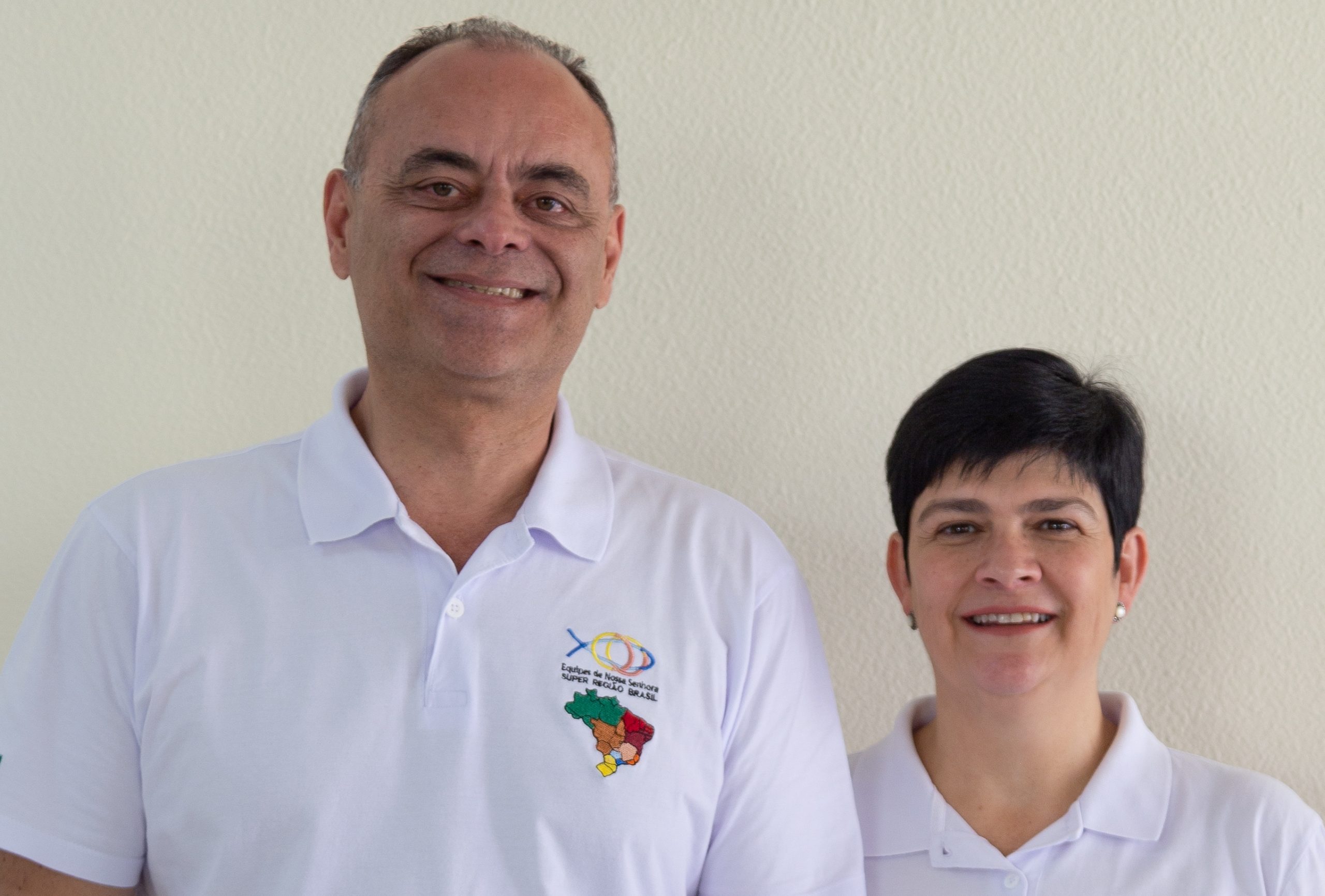
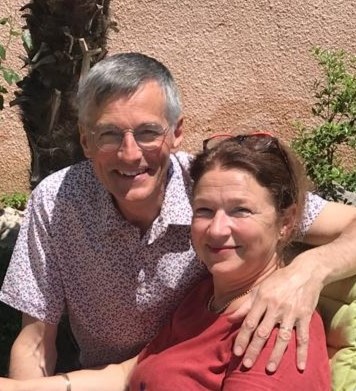
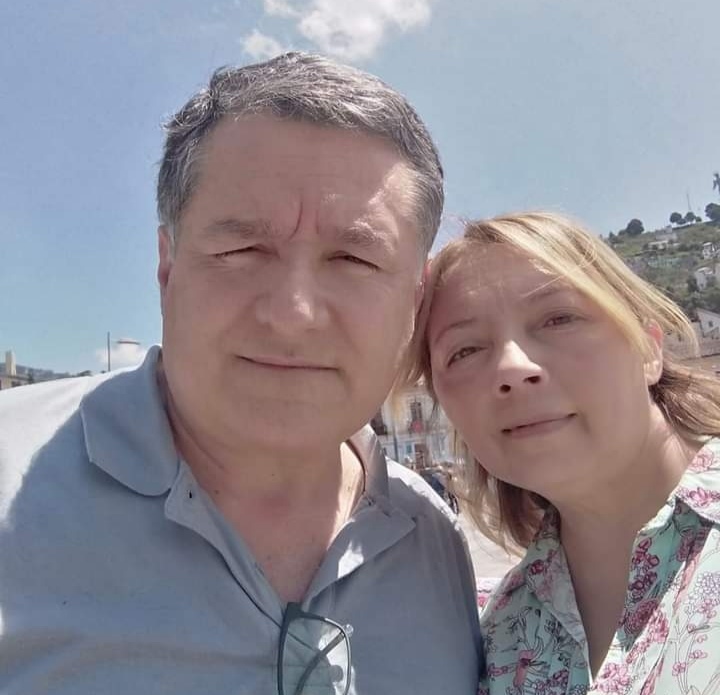
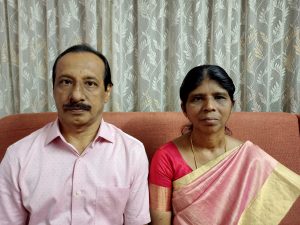
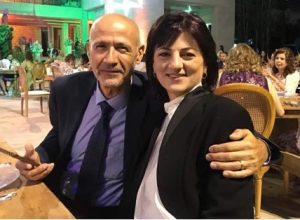
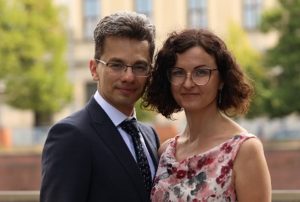
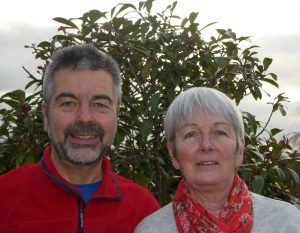
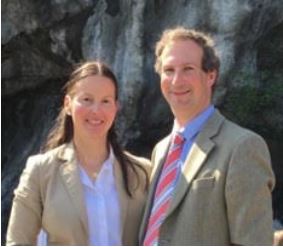
We are Georgina and Youssef Boutros. We are Lebanese and live in Lebanon, a country that has been going through very difficult times for more than fifty years, marked by war, violence and injustice.
Married for 32 years, we give thanks to God for our two daughters and two sons.
We have been members of Teams of Our Lady for 31 years. Throughout our married life, we have served the Movement in many capacities, including as a pilot couple, sector couple, national information couple, formation couple, and regional couple. We currently serve on the ERI as the Zone Responsible Couple for the Central Europe and Middle East Zone, which encompasses 23 countries.
Georgina is a registered nurse specializing in community health. She works full-time at a well-known university hospital in Beirut, serving eight hours a day, five days a week. Youssef is a surveyor and operates his own surveying office.
We are also involved in Faith and Light, a community whose mission is to build relationships of friendship with people with disabilities. It is, in fact, where we first met.
Christ remains for us a true source of strength when we pray together and place Him at the center of our lives. In moments of tension or fragility, we have come to understand that we cannot build this unity through our own efforts alone. It is by returning to Him that we find peace, the capacity to listen to each other and to forgive one another.
Amidst the chaos, uncertainty and fears during the period of war, we discovered that our strength did not come from ourselves. When everything around us seemed to waver, Christ became our anchor. He taught us to draw closer rather than allow anxiety to divide us. In prayer, in shared silence and even in the heart of our worries, we found an unexpected peace. As a couple and as a family, we remained united in spite of fear, by preserving moments of listening, peace and hope.
Even in our service to Teams of Our Lady, we continued to move forward and to prepare our commitments. These took on an even deeper meaning: to serve, to love and to remain present to others despite the war became for us a concrete way of living our faith in hope.
Continuing to travel for ERI meetings and to visit teams in different countries of our zone was not straightforward, especially with the fear of seeing the airport close. Each departure raised doubts and questions, sometimes even the temptation to give up. Yet we chose to trust and not to let fear decide for us. Those journeys then took on a new meaning: they became a way of remaining faithful to our mission and close to others. Each encounter became precious, each face a source of encouragement. We had the deep conviction that, despite the war, an even stronger bond continued to unite us. It was like an echo of Christ’s call:
“Come, follow me.” Gospel according to Saint Matthew 19:21.
Christ did not remove the risks, the worries or the trials, but He gave us the inner peace to move forward. He transformed our fears into opportunities to grow in trust, and our commitments into a witness of a living hope. He caused to grow within us a unity and a hope that nothing has been able to break.
This testimony remains a path still under construction, for our relationship with Christ grows and renews itself each day. But we deeply believe that, as long as we remain rooted in Him, He continues to make us radiant witnesses, united in love. As Saint Paul says:
“I can do all things through him who strengthens me.” Letter to the Philippians 4:13.
Glory to God
ERI MAIL JUNE 2026
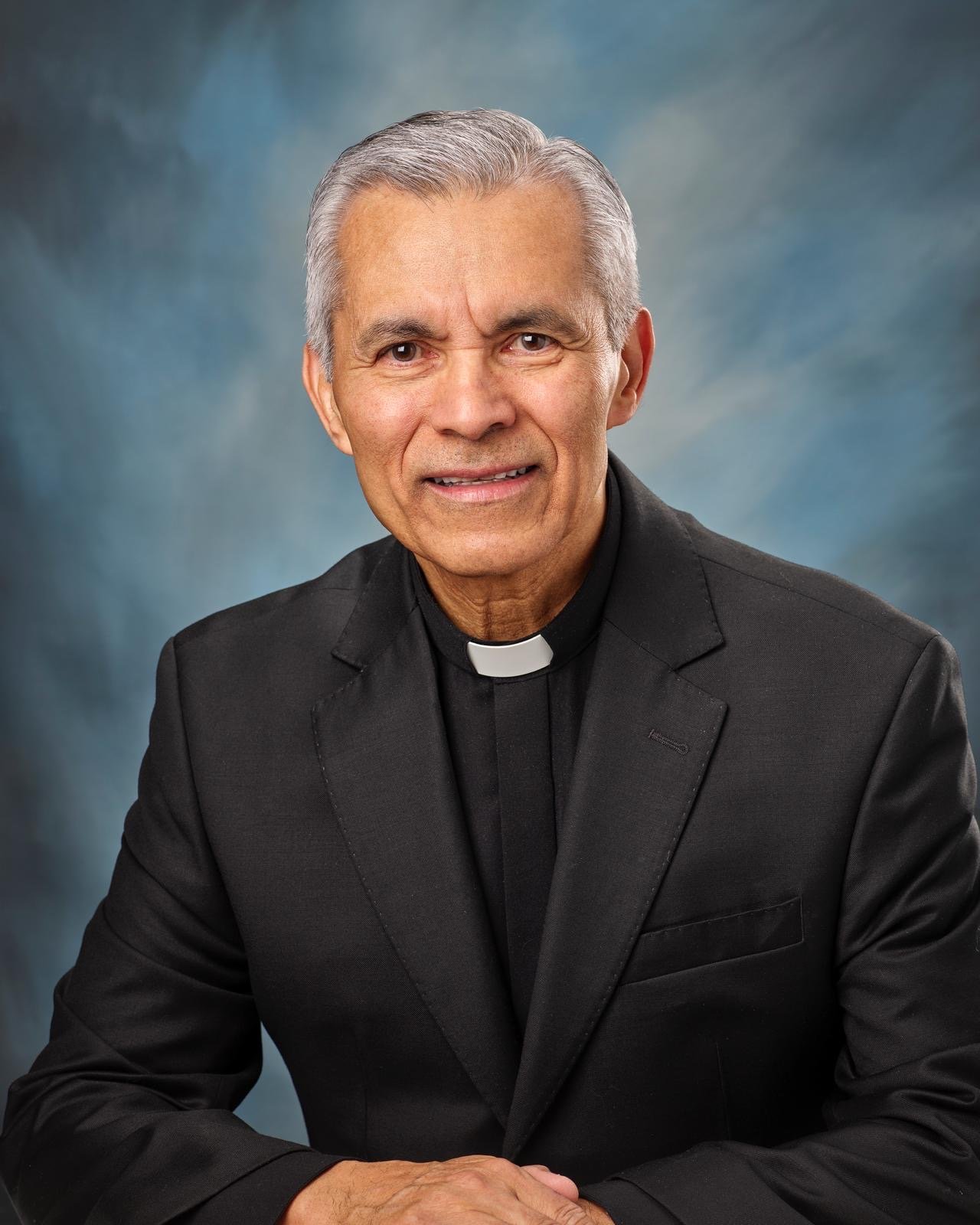
Father Augusto Garcia PSS
On May 25, 2026, Pope Leo XIV presented the encyclical Magnifica Humanitas (MH) to the Church and to humanity. It is a lengthy text that addresses many issues affecting contemporary life: the dignity of the human person, work, freedom, the quality of social relations, peace, justice, and responsibility toward our common home.
The encyclical’s subtitle is: “On safeguarding the Human Person in the age of Artificial Intelligence.” Therefore, it is not a text “about artificial intelligence,” but rather about the value of the human person “in the age of artificial intelligence.” It is not a warning against artificial intelligence, but rather an invitation to safeguard the greatness of the human person and what it means to be human in these times of profound transformation. The Church wishes to be part of the dialogue on the development of artificial intelligence. Our time urgently needs the Church’s wisdom regarding the human person entrusted to her in the light of revelation in Christ: regarding the dignity of the unique and irreplaceable human person, his freedom, intelligence, and conscience, his capacity to seek God, and his relational vocation.
To encourage you to read it, we would like to briefly highlight some of the elements the encyclical offers as criteria “for a moral and social discernment that safeguards the primacy of the human person” (MH, 97) in the face of new technologies, particularly artificial intelligence.
- Magnifica Humanitas – Magnificent Humanity. The title invites us to contemplate humanity as “magnificent.” This is not a naive view of humanity. The text acknowledges the miseries and wounds of our humanity, as well as the terrible capacity for evil that lies within each of us. It highlights wars, slavery, and exclusion, as well as the appalling levels of indifference and cruelty. Despite all this, the Holy Father is not afraid to call it “magnificent.” Why? Because every human being possesses infinite dignity and, despite their capacity for evil, never loses that sublime capacity to love that God gave them when He created them. He also offers some examples of humanity’s greatness, its “magnificence”, that make us proud to be human. Among these are culture, art, and the institutions that protect us. He highlights the names of great men and women such as Mother Teresa of Calcutta, Dorothy Day, Marie Curie, Elisabeth Elliot, and Benazir Bhutto. He recalls some martyrs such as Kolbe, Romero, Angelelli, and Van Thuan. Not to mention the martyrs of everyday life: parents, doctors, nurses, and volunteers (MH, 122–125). He concludes with this fascinating statement and question:
For this reason, humanity — in all its grandeur and woundedness — must never be replaced or surpassed. We can embrace the technological progress that alleviates suffering and unlocks new possibilities, provided that we do not abandon the very essence of our humanity, namely the capacity for relationship and love. This leads to a crucial question: if an authentic “more than human” exists, where is it to be found? The Christian faith answers that question by pointing to a fulfillment that does not arise from a technological divinization, but through God’s grace received in Christ. (MH, 126).
- Safeguarding the truth as a relational value. One of the encyclical’s first warnings concerns the safeguarding of the truth. Machines, through the use of artificial intelligence, can offer precise information and, in a certain sense, provide a degree of truth. Pope Leo reminds us that machines cannot replace our responsibility to seek the truth. The intellectual capacity to seek the truth is part of the dignity of the human person. The Holy Father wishes to make it very clear that truth is not merely “rational”, that is, the rational dimension of facts “as it requires verification, cross-checking of sources, and responsible argumentation”, but also “relational,” since it is “built through bonds of trust and shared practices, as well as an honest exchange with others and with the world” (MH, 132). True knowledge, whether scientific or social, is fundamentally relational because it is rooted in mutual trust and our openness to dialogue. Here, too, the Pope concludes with an enlightening invitation:
Let us remain faithful to the truth! Living amid incessant flows of information, opinions and images, we know how easy it can be to influence decisions and preferences through increasingly sophisticated algorithms. [218] In this context, it is imperative to cultivate hearts that love the truth, prefer what is right despite the most appealing content and pursue wisdom rather than immediate results. We must always keep before us the truth about God and humanity, just as Christ has revealed them to us. (MH, 237)
- Preserving inner freedom. This task is central to the encyclical. Human freedom is presented as a gift rooted in a truth that is personal, incarnate, and relational. Our freedom and intelligence are expressed through a knowing and a loving that are embodied in an irreplaceable way: through care, work, contemplation, suffering, and friendship. In light of the impact of digital platforms on human freedom, Pope Leo reminds us that we must be aware that these platforms are “since platforms and services are often designed to capture users’ time and attention, exploiting their vulnerabilities and weakening their inner freedom.” (MH 170) Pope Leo sustains that maintaining inner freedom requires a healthy attitude, characterized by rhythms that include silence, reflective study, reading, and careful analysis (MH, 146). Today, there are already signs of a possible dehumanization of knowledge, where people “know many things” but struggle to find “meaning in their lives.” The Pope concludes with a warning: “There is an urgent need to promote technologies that strengthen inner freedom by fostering education in digital sobriety and the protection of minors, thus countering models that exploit vulnerability.” (MH 170)
- The value and fruitfulness of our experience of limits. We all appreciate the advances brought about by new technologies, for example, in healthcare, the speed of information, and education. But as the Holy Father says, “the key issue is not the use of technology as such, but the vision that underlies it. (…) It is one thing to integrate technology within a human-centered, relational vision; it is quite another to be guided by an outlook that devalues human limits and promises a purely technical form of ‘salvation’.” (MH 117). This is the case with narratives such as posthumanism, which consider humanity to have reached its end and even propose its replacement and the urgency of an evolutionary leap that always depends on technology. On the other hand, there are some forms of transhumanism that lead us to believe that, thanks to sophisticated technological devices, our lives will be a paradise. These narratives sell humanity the false dream of overcoming the limits of the human condition (MH 116), an “almost disembodied humanity” (MH 232).
Behind this idea of progress lies the very opposite of what we believers call “new life”, that is, the theological life lived in faith, hope, and charity, which truly leads us beyond ourselves to the genuine overcoming of our frailties through a life of grace. In the narratives described above, the theological virtues are replaced by a technological faith and hope, with the consequent loss of charity. In all this, there is a risk of forgetting the spiritual dimension of the human person, created and loved by God, which cannot be reduced to technological mechanisms. Let us remember that the essence of these transhumanist narratives is to propose as their great ideal the overcoming of all limits. In response to this proposal, the encyclical speaks of the value and fruitfulness of our experience of limits: “Our relationship with life seems to be in crisis today. Everything that appears as a “limit” – incapacity, illness, old age, suffering, vulnerability – tends to be seen primarily as a defect to be corrected, rather than as a reality through which our humanity matures and opens itself to relationship.” (MH 118). And the Holy Father adds: “Yet we must remember that humanity flourishes not despite limitations, but often through them.” (MH 118). The experience of human limitations brings to fruition the great values of human dignity, as the Holy Father says: “It is precisely within our limitations that the following find a place: compassion, as well as a sincere concern for the needs of others; a generosity that can emerge even in the midst of darkness and failure; spiritual experience and the worship of God.” (MH 119).
The definitive answer to the promises of transhumanism and posthumanism currents is found in the mystery of the Incarnation, as the Holy Father proclaims:
The Incarnation opens a different pathway. (…) The mystery of the Son of God entering into our human condition promises something quite different. The living God descends into our history in order to free us from all forms of slavery. He takes upon himself our weakness and transforms it into a setting for salvation. (…) What saves humanity is the divine love that descends into the most fragile point of our history and renews it from within. (MH 232).
- The value of transcendence as the vocation of the human person. Within every human being beats the desire to surpass oneself, to go beyond, a desire that does not arise from a wish to flee reality or to disregard limits, but rather from God’s gift. This has been the affirmation of the Christian tradition that “human beings are not confined by the boundaries of their own nature; rather, they are called to self-transcendence.” (MH 127). The Holy Father explains that this is possible thanks to God’s free, surprising, and superabundant initiative: “The one who makes this passage possible can only be the Eternal One who gives of himself. Indeed, it is God himself who overcomes the ‘infinite’ disproportion.” (MH 127). For, as St. Paul says: “If anyone is in Christ, there is a new creation: the old has passed away; behold, the new has come” (2 Cor 5:17). The Holy Father quotes Pope Francis when he explains that “When we embrace the possibility of transcending ourselves through God’s grace, we do not deny our nature, nor do we become less human.” “On the contrary, as Pope Francis explained, ‘We become fully human when we become more than human, when we let God bring us beyond ourselves in order to attain the fullest truth of our being. (EG 8)” (MH 128)
The Teams of Our Lady Movement, inspired by the charism given through the grace of the sacramental love of couples, works diligently every day to be part of that “magnificent humanity” that God dreamed of, that humanity capable of loving, of giving one’s life for their spouse and others, of suffering with them, that humanity which wants to allow God to lead it beyond itself so that it may be fully itself in friendship with Him.