THE SATELLITE TEAMS (ST), THOSE GREAT UNKNOWNS
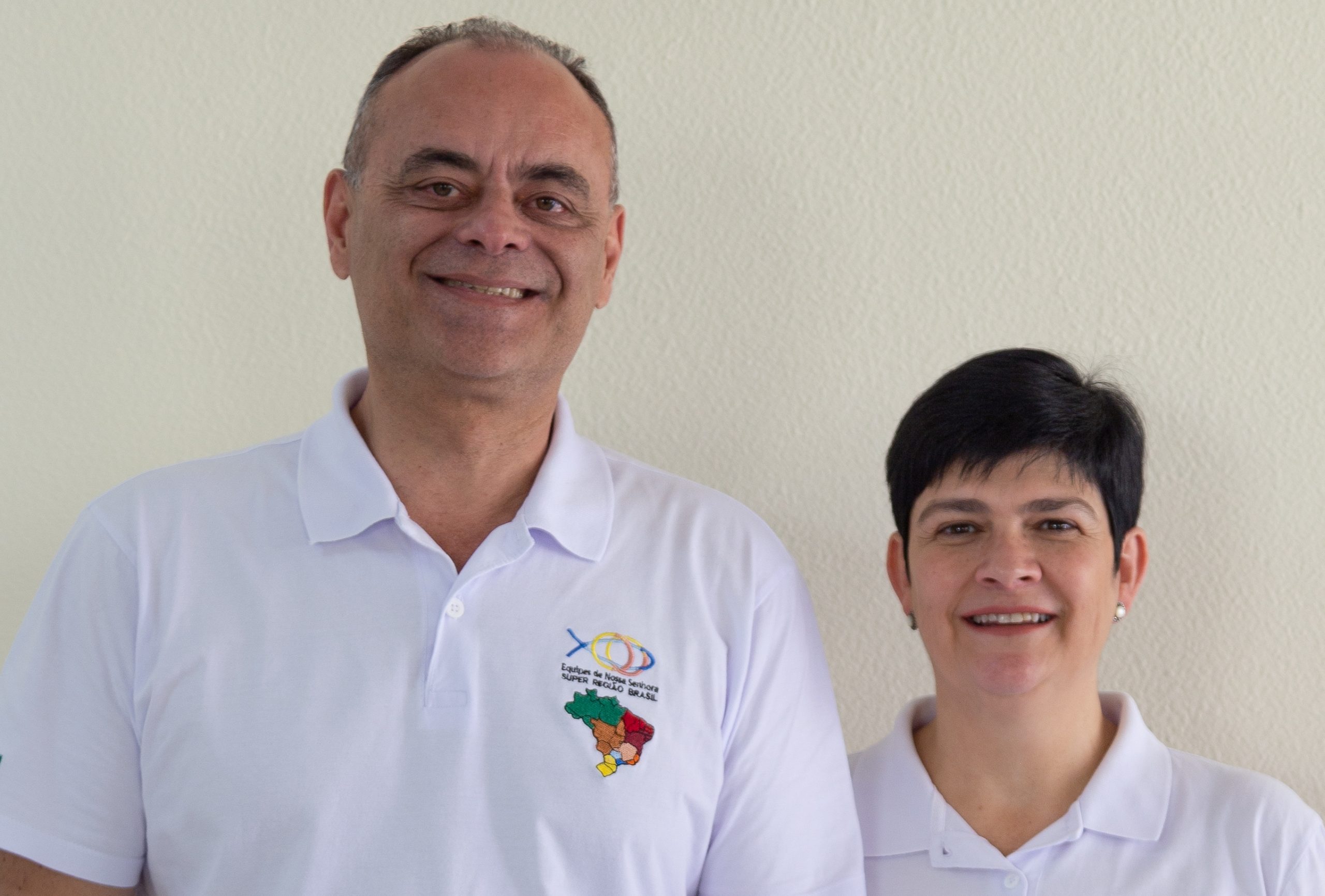
It has now been two years since we were entrusted with the task of coordinating the satellite teams, together with the communication of the International Responsible Team (ERI), and our great concern has been to make known the existence and importance of the teams we had been entrusted to coordinate.
In the year 2000, following a visit that the ERI, led by the Volpini couple, made to the Houston Space Center on the occasion of one of their meetings, it was felt that the missions of communicating, connecting, and exploring carried out by a satellite were similar to those of these teams, which have in a way orbited around our movement for more than two decades, contributing reflection, research, and formation resources. Perhaps this curious name makes their mission somewhat harder to understand; that is why they could equally well be known as working and development teams, a name which, in our opinion, is far more descriptive.
Over the years, the ST have taken on the task of responding to the very diverse needs of teams around the world. The ERI forms teams made up of couples belonging to different Super-regions and assigns them a project to develop. What is most enriching about the teams is their diversity, as a small sample of our Movement. This characteristic is essential so that the work is approached from different points of view and thus gives an adequate response to the wide variety of cultures that make up the Teams of Our Lady.
Many are the themes addressed by the many satellite teams that have existed, from topics of study, through sexuality, teams of elders, young couples, formation, or the updating of documents, among others. The output of this work has always sought to respond to the requests made by the ERI. Sometimes with greater reach and acceptance than others, these materials have always remained available to all the Super-regions for their free use. Many of them can still be found on the international website, available to anyone who wishes to consult them.
This is precisely the process followed by the current International Responsible Team. After a general consultation with the International College, made up of all those responsible for the Movement’s Super-regions, it was concluded that the areas of greatest interest today are formation, access to the resources created, and a greater knowledge of the figure of Father Caffarel. Based on this finding, three teams have been created to develop three projects that respond to these needs.
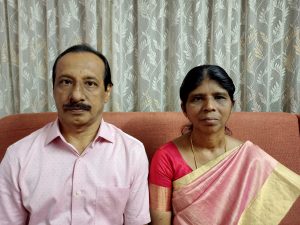
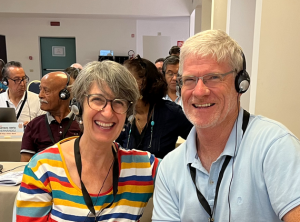
The first of these teams, Updating the Permanent Formation Plan, is working to reorganize, update, and harmonize the current permanent formation plan, remaining faithful to the founding charism while also attending to today’s formation needs. This team is made up of five couples from Colombia, Paraguay, Brazil, Lebanon, and Canada.
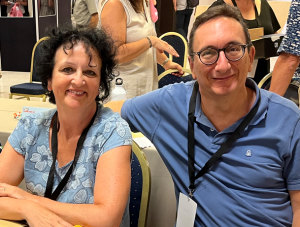
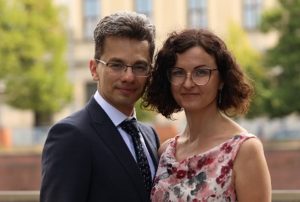
The second team, Resource Catalogue, has as its main objective the creation of an online document-management platform that allows for efficient cataloguing, as well as the classification and distribution of all kinds of available resources (audiovisual materials, presentations, books, formation materials…), enabling their preservation, compilation, and access by team members with the appropriate permissions. It is a huge and very ambitious task, but once completed it will be of tremendous use and, what is more, it is based on the principle of mutual help, making our own work available to whoever needs it. The six couples that make up the team come from Brazil, the United Arab Emirates, Senegal, Portugal, the United States, and Italy.
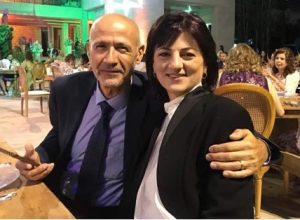
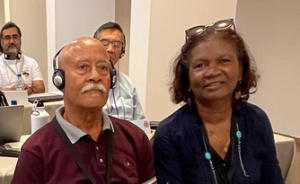
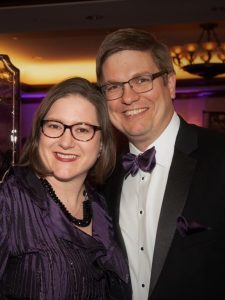
The third and final team does not have the usual structure, as its own particular nature does not allow for it. Recovering Father Caffarel’s Materials, as it is called, was created to recover, review the translations of, and digitize Father Caffarel’s already-published materials, with the aim of making his work known both within and outside the movement, thereby supporting the cause of his beatification. Naturally, the collaboration of the Friends of Father Caffarel is essential, not only to benefit from their valuable experience and support, but also to align their interests. This is why several French couples from this association are already active members of the team, while two team couples from Brazil and Argentina are reviewing translations already made. There is still much to be done: making an inventory, transcribing audio materials, digitizing… Father Caffarel’s body of work is extensive, and a thorough job will require a great deal of time and dedication, but the resulting benefits will undoubtedly be of great value for spreading knowledge of his life and work.
If you have made it this far, you will never again be able to say that you don’t know what a satellite team is, and we will have achieved our main objective: making them known. However, to see for yourself their importance, it will be worth exploring the materials already produced by previous teams. There are many treasures still to be discovered, and it is well worth taking the time to look at documents and other resources that are the fruit of the work of many couples. That will definitely be the best way for the satellite teams to become, from now on, those great knowns.
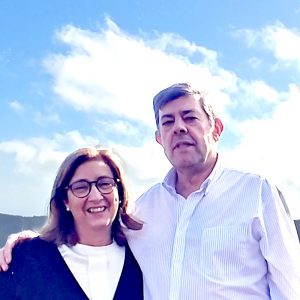
Ricardo and Carmen
Couple Responsible for Communication of the ERI
ERI LETTER SEPTEMBER 2026
Ten Years After the Apostolic Exhortation Amoris Laetitia
The Holy Father Leo XIV has convened the leaders of the Eastern Catholic Churches and the presidents of the Episcopal Conferences to a summit on the family to mark the tenth anniversary of Pope Francis’s Post-Synodal Apostolic Exhortation Amoris Laetitia, to be held next October in Rome. This invitation comes in a message signed by the Pontiff on the Solemnity of St. Joseph, ten years after the publication of this Exhortation on March 19, 2016. We on the International Leading Team consider this a very opportune moment to reread this document as couples or with our base team.
At the time, this Exhortation was at the center of reflections and debates, which, unfortunately, were often limited solely to the issue of the sacraments for divorced and remarried persons. Pope Leo describes this Exhortation as a “radiant message of hope regarding conjugal and family love.” In fact, he wishes “to give thanks to the Lord for the impetus given to the Church’s study and pastoral conversion, and to ask Him for the courage to continue on this path, continually embracing the Gospel anew, with the joy of being able to proclaim it to all.”
In his message, Pope Leo XIV draws on the teachings of the Second Vatican Council to remind us that the family is “the foundation of society, a gift from God, and a school of deeper humanity” (Second Vatican Council, Pastoral Constitution Gaudium et Spes, 52) and that “through the sacrament of marriage, Christian spouses form a kind of ‘domestic church,’ whose role is essential for the education and transmission of the faith” (Second Vatican Council, Dogmatic Constitution Lumen Gentium, 11). He also recalls that the Popes took up the spirit of the Council: John Paul II with Familiaris Consortio in 1981 and Francis with Amoris Laetitia. Both exhortations, Pope Leo notes, “have stimulated the Church’s doctrinal and pastoral commitment to the service of young people, spouses, and families.”
Pope Leo insists on the need to continue delving deeper into the valuable teachings of Amoris Laetitia today. The Pope highlights several aspects of this Apostolic Exhortation:
- The biblical hope in God’s loving and merciful presence, which enables us to live “love stories” even when facing “family crises” (AL 8);
- The invitation to adopt “the gaze of Jesus” (AL 60);
- To tirelessly encourage “the growth, consolidation, and deepening of conjugal and family love” (AL 89);
- The call to discover that love in marriage “always gives life” (AL 165) and that it is “real” precisely in its “limited and earthly” nature (AL 113);
- “To accompany, discern, and integrate fragility, moving beyond a reductive conception of the norm, and to promote the spirituality that springs from family life” (AL 313).
In his message, Pope Leo also adds some words that seem directed at team members, saying that “to fulfill the mission of proclaiming the Gospel of the family to the younger generations, we must learn to evoke the beauty of the vocation to marriage precisely by acknowledging its fragility, in order to awaken trust in grace and the Christian desire for holiness.” From this, springs his gratitude to the Lord “for the families who, despite difficulties and challenges, live ‘the spirituality of family love […] made up of thousands of real and concrete gestures.’” It is impossible not to see reflected here the faces of team couples in their daily lives.
For their part, the Dicastery for Laity, Family, and Life and the General Secretariat of the Synod published the thematic itinerary in July. This document prepares for and accompanies the work of the Meeting with the Holy Father. As this document emphasizes, these working sessions are intended to serve as a genuine space for encounter, listening, and discernment: welcoming the lived experiences of families, sharing concrete life stories, reflecting on the initiatives of support that communities are putting into practice, and engaging in dialogue with experts.
It is, therefore, as the working document states, “an eminently pastoral journey that places families at the center, not only as the recipients of the Church’s action, but as AGENTS OF HER MISSION, through whom the Gospel takes shape in everyday relationships, in decisions, in fragility, and in hope.” This pastoral emphasis is highlighted in the title of the working document: “Ten Years After Amoris Laetitia: Proclaiming the Gospel with Today’s Families.” This is very important because in TOOL, the Gospel of Marriage is proclaimed WITH couples and their families. Every day we learn more clearly that we not only receive the gifts and joys of the Charism but are also the ones responsible for proclaiming it here and now, where we live.
There are five thematic areas proposed for participants to reflect on, both before and during the Meeting:
- Families Today: reality, beauty, and challenges. Discerning the signs of the times based on the experience of families and the Church’s commitment today.
- Young People and the Discovery of the Vocation to Marriage. Listening to young people and accompanying them as they discover the value of marriage.
- Married Life. The First Years of Marriage: A Decisive Time. Listening to and accompanying couples during the early years of married life and at every stage of life.
- In the difficulties of life: accompanying and supporting. Walking alongside families in complex situations.
- Christian families, agents of the Church’s mission. Embracing conjugal and family love as a driving force for the mission.
These topics may prompt some reflections within our base teams, at other times, or during formation sessions. But our final invitation is that, as TOOL, we accompany this meeting of the Holy Father with the bishops and families with our prayers, so that the Spirit of God may continue to make the joy and beauty of the proclamation of the love found in the sacrament of marriage and the family shine before humanity, and may He strengthen all of us team members to be His witnesses.
Father Augusto
Spiritual Advisor of the ERI